
Loudspeaker
A speaker for a hi-fi or home theater system: bookshelf, floorstanding, center, surround or studio monitor, passive or powered.
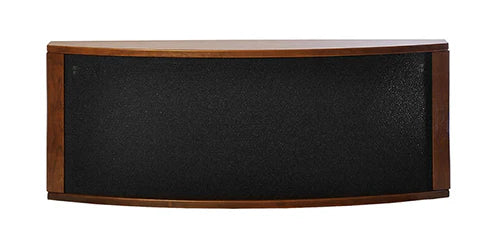 Magnepan CCR
Reference Center Channel SpeakerThe Magneplanar CCR was designed as a companion center channel speaker for the MG 20.7 (or MG 3.7i). The same or similar technology of the 20.7 was used for the CCR with a true ribbon tweeter and quasi ribbon midrange.For many of our "Maggie" customers who are considering adding home theater to their music system, we hear that home theater is not their highest priority. If that describes you, is the CCR the best choice for you as a 3.7i or 20.7 owner? If you think it is not, keep in mind that the home theater is not their highest priority. If that describes you, is the CCR the best choice for you as a 3.7i or 20.7 owner? If you think it is not, keep in mind that the center channel speaker "makes or breaks" a home theater system. For those who want the best in home theater performance, the CCR is the logical choice.However, we won't attempt to fool you. The CCR is no 20.7. If the state-of-the-art for sound reproduction could be had with a "small" speaker like the CCR, what is the need for the radiating area of a 3.7i or 20.7?The CCR has curved true ribbon of the same design as the 20.7 or 3.7i. The curved quasi ribbon midrange is a similar design to the midrange of the 20.7 with 213 square inches of radiating area. Because home theater places greater demands on the center channel speaker, the CCR was designed for higher efficiency.All speaker companies must deal with the same issues for home theater. The space and height available for the center channel speaker is dictated by the video. For a speaker designer, it is the equivalent of "tying one arm behind their back." The center channel speaker does approximately 60-70% of the "heavy lifting". It is ironic that the most important speaker for home theater has major design constraints. Most ribbon and electrostatic speaker companies employ a dynamic midbass coupler to cover the range between the subwoofer and the ribbon or electrostatic driver. In our opinion, that is an unacceptable compromise for the most important speaker in the home theater system. Magnepan employs the front left/right speakers or the CC Speaker Stand or DWM Bass Panels to achieve full range Maggie sound for the center channel (See the CCR manual).Magneplanar CC Speaker StandThe Magneplanar CC Speaker Stand is both a speaker stand and a midbass/bass speaker to augment the low frequencies for Magneplanar center channel speakers in a free-standing installation. (Shown below with the CCR).Dynamic woofers, especially subwoofers, can not blend with the "speed" of the Magneplanar center channel quasi-ribbon midrange drivers. The woofer section of the CC Speaker Stand uses the same DiPlanar technology as the Magneplanar 20.7 bass driver. The thin-film, planar-magnetic driver in the CC Speaker Stand has flat frequency response to 5 kHz . An internal crossover has a high pass filter for the Magneplanar center channel speaker. When coupled with a Magneplanar center channel speaker, the combination creates a full-range Magneplanar in the middle for home theater or multi-channel music.
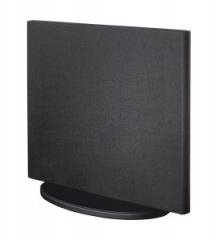 Magnepan DWM Bass Panel - Includes free shipping to continental U.S.!
Need more bass?The Magneplanar Bass Panel (DWM) is a dipole, thin-film, planar/magnetic bass panel. It is two bass drivers in one panel. Two "voice coil" grids drive one bass diaphragm. The Bass Panel is essentially a small section out of the 20.7 bass drivers. But, please don't call it a "subwoofer". Subwoofers are a separate category from woofers. Subwoofers are intended for below 40 Hz and are known as "slow" and "muddy" when used above 40 Hz.Subwoofers can be adjusted higher than 40 Hz, but you will achieve better sound by using the Bass Panel to optimize the bass of your Maggies. The DWM Bass Panel has no problem integrating with a full-range Maggie because it is "all Maggie."
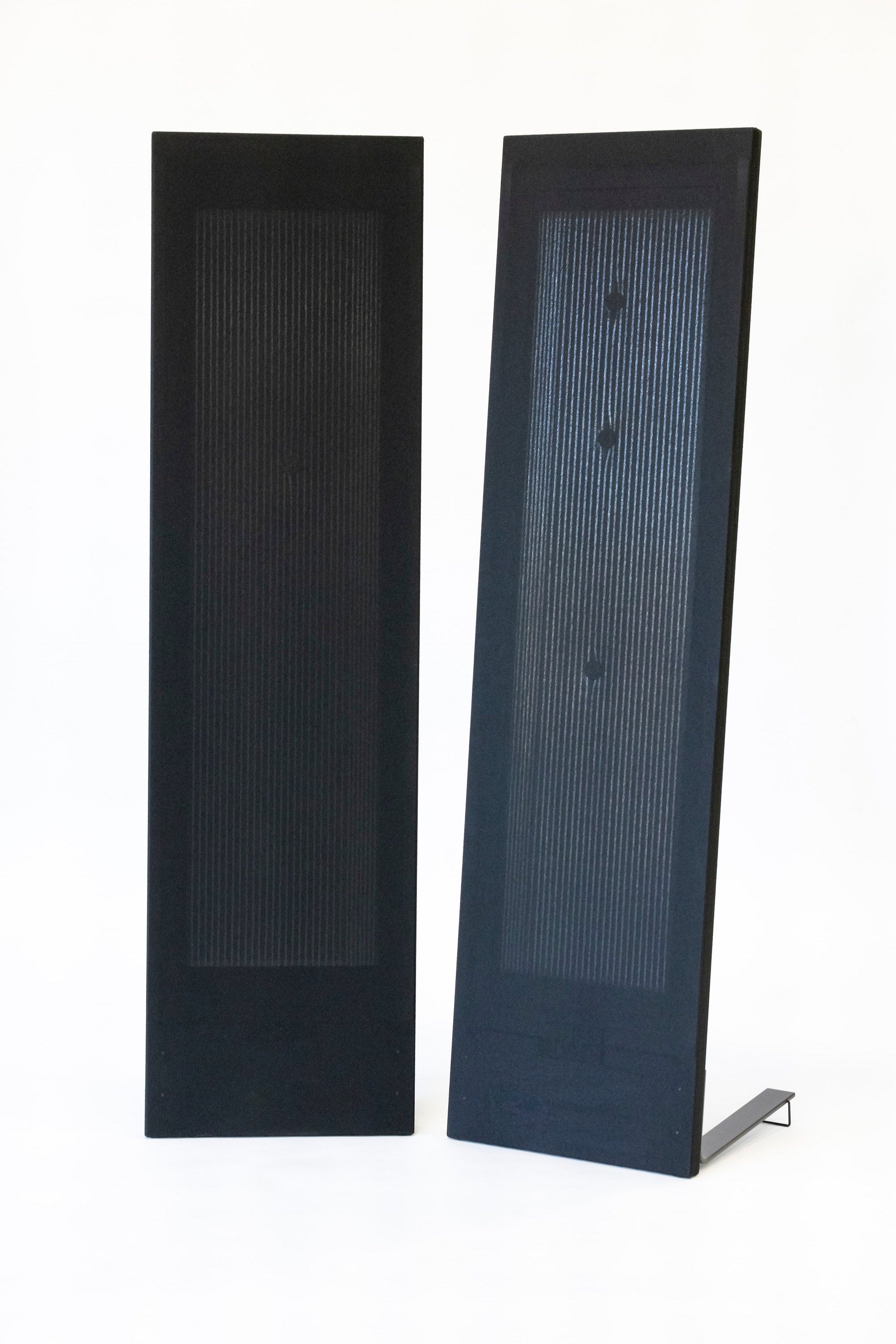 Magnepan LRS+ <ul> price per pair - Free Shipping!
Magnepan LRS+ Following in the footsteps of the highly acclaimed LRS, the LRS+ takes it up a notch."This is another slam-dunk POY (Product of the Year) nominee, and, IMO, the best buy (along with the MG1.7i) in an affordable loudspeaker for modest-sized rooms.” 2022 Golden Ear Award. Jonathan Valin, October 7th, 2022 Check out Jonathan’s full review of the LRS+ below. What is a ribbon speaker?Ribbon and electrostatic speakers are elegant and simple. The air is moved and sound waves are created by moving an ultra-light film or aluminum ribbon. Ultra-low massenables the ribbon to respond quickly to the electrical signal from the amplifier. What you hear is higher definition. Reviews:"Most significant product of this decade?"The Absolute SoundSpecifications LRS+ SpecificationsDescription2-Way/Quasi RibbonFreq. Resp.50 - 20 kHzRec PowerRead Frequently Asked QuestionsSensitivity86dB / 500Hz / 2.83vImpedance4 OhmDimensions48" high x 13" wide x 1" deep
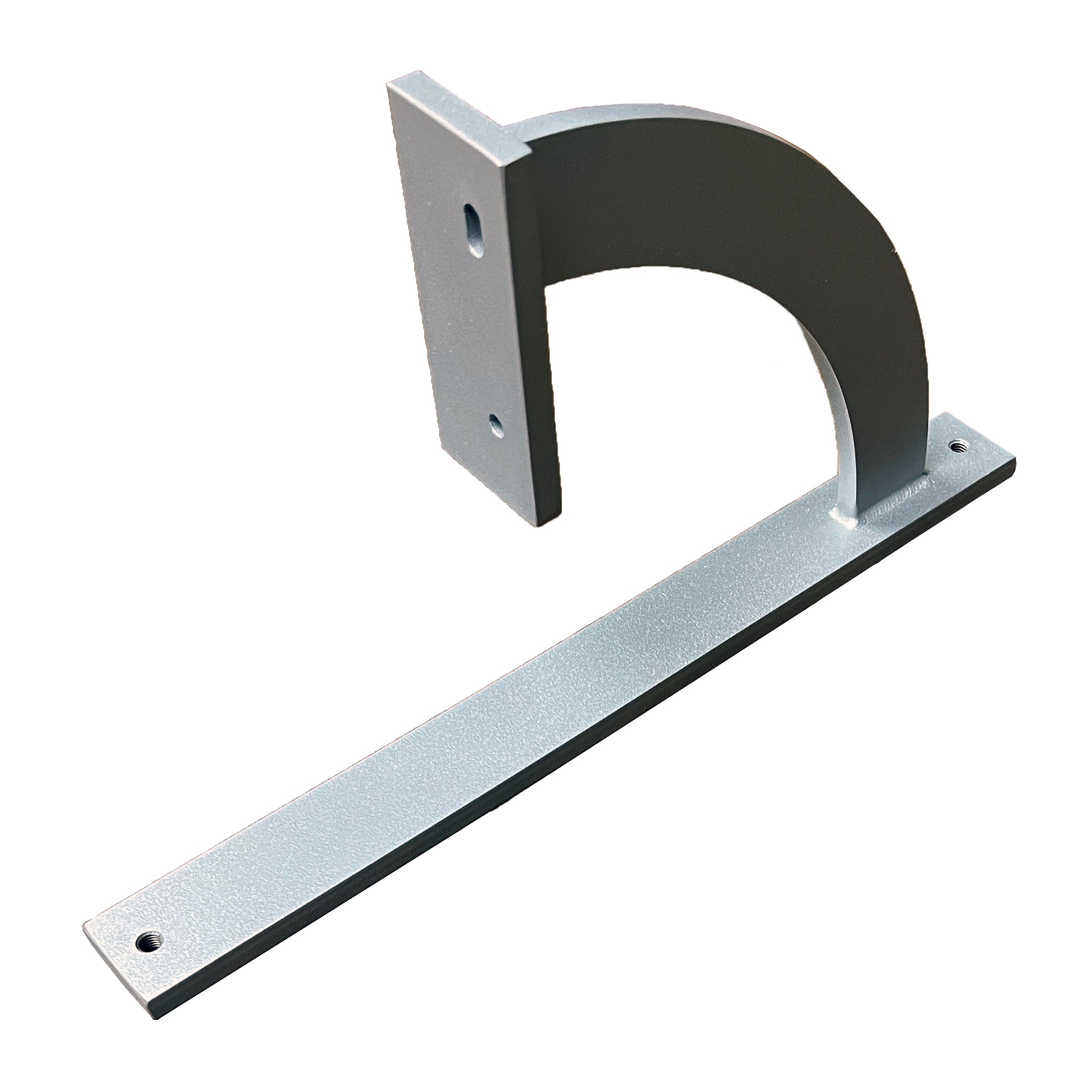 Magnepan Maggie Stands
One Size Fits Most!Available in BLACK, SILVER, and GOLDLRSLRS +.71.7i Our optional Maggie Stands will enhance your listening experience while looking great. They install in the existing stand mount threaded holes of your speakers. Drilled and threaded holes at the front and back for mounting spikes or feet of your choice.
 Magnepan MC1
MC1: BIG Magneplanar Sound in a New Smaller PackageThis Multi-Channel, 2-way planar/Quasi Ribbon speaker is designed to be attached to or placed next to a wall or cabinet. Optional floor stands are available. These speakers will normally be used in conjunction with one of the Magneplanar model Woofers or a self-powered subwoofer in a serious music or home theater system ... or both.The MC1 can be attached to a wall or cabinet and folded out of the way when not in use. It is the perfect solution for rooms which cannot accommodate floor standing models.For serious audio/video systems... we encourage you to compare the MC1 to conventional speakers costing many times more.The MC1's small size and low frequency response to 80Hz is made possible by attaching the speaker to a wall or to the side of a cabinet, which enhances the lower frequencies ... from 80Hz up, the MC1 is pure Magneplanar. The midbass to midrange and quasi ribbon high frequencies have the amazing speed and definition of all Magneplanars... The speakers are small, but the sound is big.Although home theater is an obvious application for these speakers, they really show their stuff when used in a system that is demanding for both home theater and serious music listening. Generally, home theater sound has not been as demanding (in the purist sense) as dedicated music systems. Listen to music through the typical home theater system and you will hear what we mean. The MC1 works very well for both and enables your system to be ready for all levels of future technology for all types of listening... 2-channel Stereo, multi-channel surround music, and the best of home theater.No place for a center channel speaker?The photo below is of a demonstration in a hotel during a Consumer Electronic Show. The MC1s immediately flanking the on-wall video monitor provide a dual center channel array which can outperform a single center channel speaker.A pair of our on-wall speakers achieves a center channel image in the same manner as a stereo system achieves a center image. By angling the speakers approximately 30 degrees to the wall, the center channel speaker on the left of the video monitor is on-axis with the viewer off to the right--- and consequently is louder than the center channel speaker on the right of the monitor (which is closer to the viewer). This "pulls" the audio image to the left and keeps the dialog centered on the screen better than point source speakers. It also raises the center channel image to the same height as the screen.Finally, when the Magneplanar on-wall speaker is used with a flexible bass management system, a large, full-range Magneplanar sound in the middle can be achieved with our on-wall design. Once you have heard this concept, you won't be tempted to buy one of those sleek center channel speakers designed for flat panel video monitors.And there is a bonus for those willing to install this unorthodox concept. In blind-fold testing, listeners found that center channel dialog and information was easier to understand with a "Maggie" dual center than with a conventional single center channel speaker. Extensive research on speech intelligibility is available on the internet.A word of caution-- Happy customers are our best means of advertising (word-of-mouth). If you are considering MC 1s, they will sound much better if kept away from corners-- especially for front channel applications. Speakers never sound best in corners and if you need help, please feel free to call us for specific advice.If you have the option, side-wall placement of the MC 1s will give the best performance in a shoe-box shaped room. Place the speakers on the side-wall, about 4 to 6 feet from the front wall.
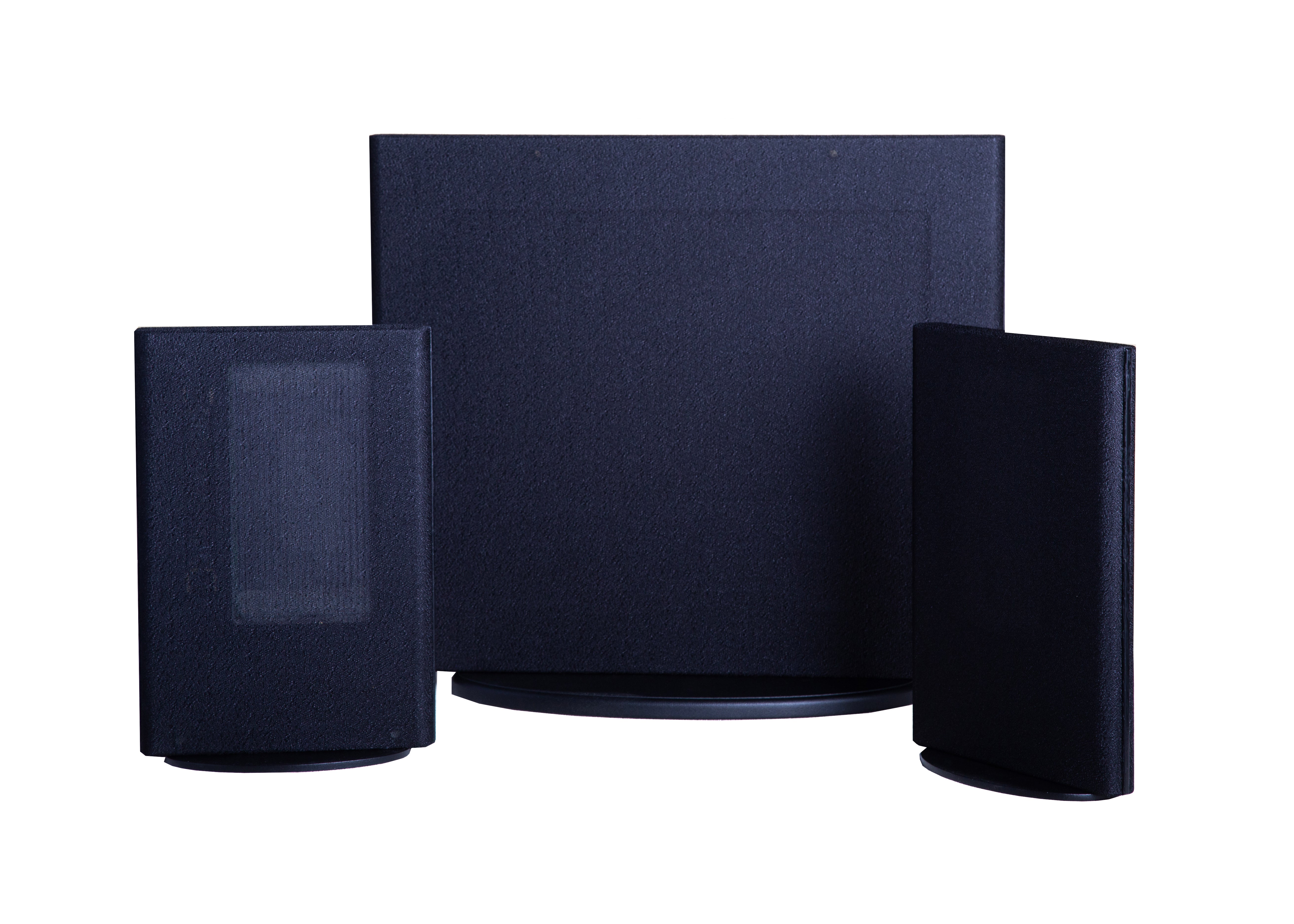 Magnepan Mini Maggie System - Includes free shipping to continental U.S.!
Add an additional DWM woofer for only $1295 + Free Shipping!Put a 3.7i on your deskWe'll tell you right up front---The Mini Maggie System is NOT a practical "computer speaker". However, if you follow our specific setup procedures (see details below), you will agree with the press that this is "The World's Best Desk Top System".Yes, the Mini Maggie System is essentially a 3.7i in miniature. No, it is NOT a "computer speaker." (And it wasn't made in China). The Mini Maggie System is the world's first full-range dipole speaker system that will sit on (and under) your desk. The Mini Maggie ("satellite") is essentially a miniaturized version of the 3.7i midrange and tweeter. The bass panel of the miniaturized 3.7i sits under your desk in the foot-well. The Mini Maggies are like all Magneplanars. They sound best when they have room to "breathe" on your desk. Give them room and you will be richly rewarded for your effort.The short "modesty panel" acts as a baffle on top of the Bass Panel to increase bass. If you have prior experience with panel speakers, you know they will not produce bass if the panel is flat against a wall or solid surface. Dipole bass drivers sound best when they have an open space BEHIND the dipole speaker to "breathe". The photo below is an ideal scenario. Note that the rear wave of the Bass Panel plays into the room without impediment. And the top of the short front panel ("modesty panel") acts a bass baffle to reduce dipole cancellation and increase deep bass output. (Placing one side edge of the Bass Panel against a barrier accomplishes similar results.) Once you get the Bass Panel and Mini satellites to work together, you'll understand why it is hard to go back to dynamic woofers.According to our marketing manager, the system below at our Pittsburgh dealer is the best-sounding Mini Maggie System he has heard. There is a pattern we have observed with all the best sounding Mini Maggie Systems. It is similar for all dipoles to get optimum sound--- More than 10 milli-seconds for the first reflections. Bass reinforcement from the boundary provided by the short "modesty" panel that allows the Bass Panel to operate in free space. And a good amplifier (see FAQ).We want happy customers because referrals and word-of-mouth are our best form of advertising. We are confident if you hear the Mini Maggie System under the right conditions, you'll be impressed.Setup instructions for optimum soundAll speakers sound best when they have plenty of room to "breathe". (Notice show reports how manufacturers place their speakers in the hotel rooms far from room boundaries.) The optimum amount of space is 10 milliseconds for the first reflection. Strive to get as close to the ideal as your room will allow. Because the Mini Maggie is a desk system does not negate the laws of physics.Bass Panel operating in dipole manner with baffling as shown above.Tweeters on the outside with 1 ohm resistors for attenuation due to near-field listening.For better high frequency dispersion, tilt Mini back with rubber bumpers under speaker base.No, it is not practical for some installations, but the Mini Maggie System is much like our 20.7---pushing the boundaries of music reproduction.Small room monitor speakerWe are frequently asked if the Mini Maggie System can be used in lieu of one of our larger models. Yes, but we err on the side of caution. There is a good reason why line-source drivers are big. We suggest that you view the Mini Maggie System as a solution to a installation dilemma---especially well-suited for near-field listening in a VERY small room on speaker stands when used with two DWM Bass Panels. But, we don't want unhappy customers if it turns out that your particular installation or room acoustics are not compatible with a Mini Maggie System. "Buyer's remorse" is bad for business.
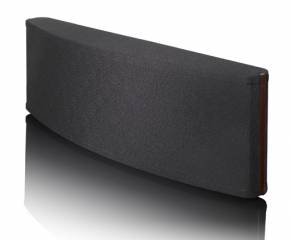 Magnepan MMG C
The MMG C is a center channel addition to our 60-day, money-back guarantee MMG program. The Magneplanar MMG C employs a horizontal, curved planar tweeter/midrange. No dynamic woofers are employed. When used with the appropriate bass management system or bass augmentation, full-range Magneplanar performance can be achieved for the most critical part of your home theater system. In soundstage.com, John Potis writes, ..."The Magneplanar system is HDTV's sonic equivalent. What it does is highlight previously unnoticed ambient details that draw you into the experience to a whole new level"... "the level of detail I gleaned from the center-channel speaker was startling and revelatory."Getting the most from your Maggie home theaterThe system design and setup of a home theater system is more complicated than a 2-channel, music system. The level of expertise in getting the center channel done right is crucial since the center channel speaker does approximately 60% of the "heavy lifting" for movies. But, the task is often complicated by the available space, or lack of space, for the center channel speaker.If there is any area where customers need assistance, it is help in getting the best center channel performance. Rooms and installations vary greatly which makes it impractical to give a simple set of guidelines or instructions. Call our 800 number and we will be happy to discuss your specific installation requirements.No place for a center channel speaker?The photo below is of a demonstration in a hotel during a Consumer Electronic Show. The on-wall model immediately flanking the video monitor provide a dual center channel array which can outperform a single center channel speaker.A pair of our on-wall speakers achieves a center channel image in the same manner as a stereo system achieves a center image. By angling the speakers approximately 30 degrees to the wall, the center channel speaker on the left of the video monitor is on-axis with the viewer off to the right--- and consequently is louder than the center channel speaker on the right of the monitor (which is closer to the viewer). This "pulls" the audio image to the left and keeps the dialog centered on the screen better than point source speakers.Finally, when the Magneplanar on-wall speaker is used with a flexible bass management system, a large, full-range Magneplanar sound in the middle can be achieved with our on-wall design. Once you have heard this concept, you won't be tempted to buy one of those sleek center channel speakers designed for flat panel video monitors.And there is a bonus for those willing to install this unorthodox concept. In blind-fold testing, listeners found that center channel dialog and information was easier to understand with a "Maggie" dual center than with a conventional single center channel speaker. Extensive research on speech intelligibility is available on the internet.
 MartinLogan Bravado
Description of the product.
- MartinLogan Classic ESL 9
Description of the product.
- MartinLogan Crescendo
Description of the product.
2,581–2,590 of 4,409